
One database versus five "integrated" applications
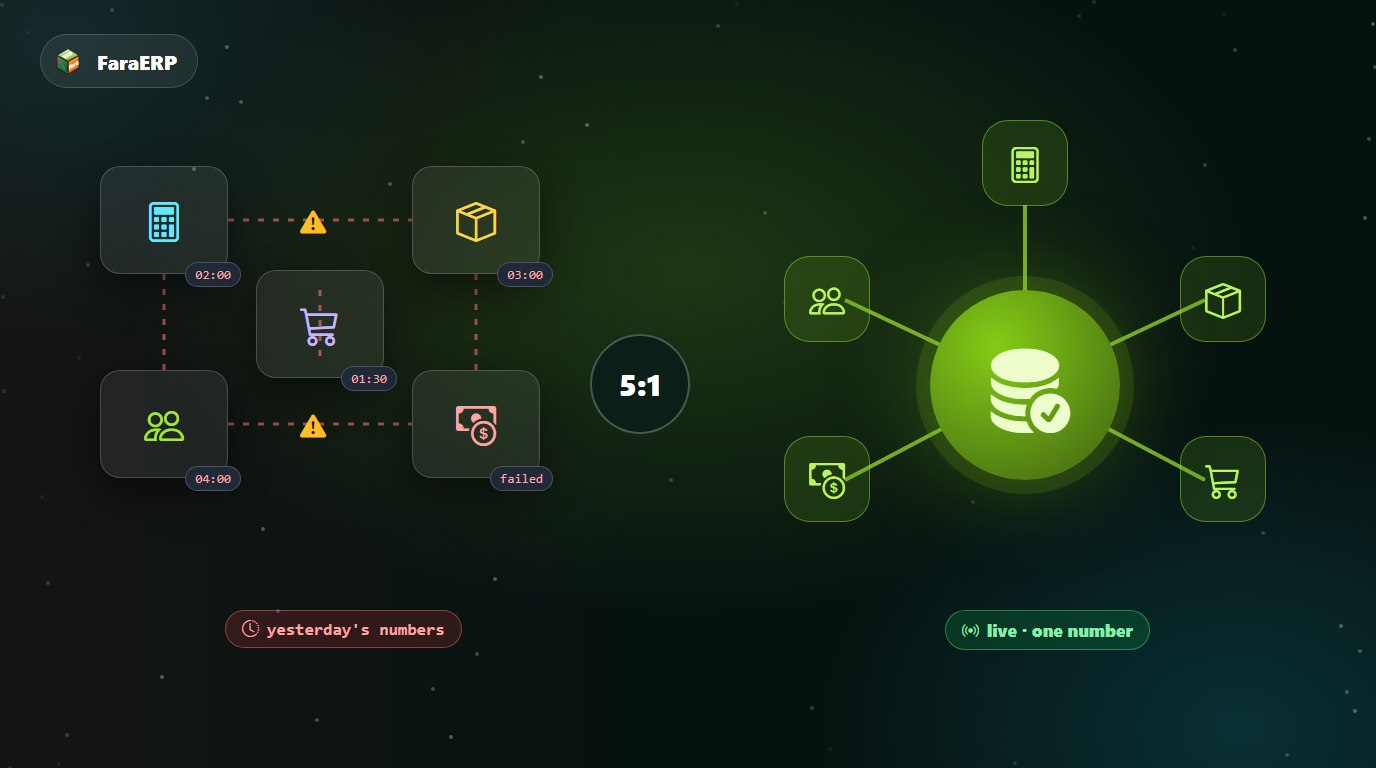
Many organisations run several separate applications "integrated" together: accounting from one vendor, inventory from another, payroll from a third, and a connector that shuttles data between them overnight. On paper it looks equivalent. In practice there are three differences.
1. The moment of truth
In one system, the instant an invoice is posted the stock has moved, the ledger entry exists and the management report has changed. With integration, none of that happens until the next sync run. So during the day, the number the manager sees is yesterday's number.
2. Reconciliation, and who has to do it
Every connector fails sometimes: a record is skipped, a code differs between systems, a date arrives in another format. The result is a discrepancy list that somebody clears by hand every month. That cost never appears in the original proposal.
3. The question you cannot ask
"What was the gross margin on this product for this customer over the last quarter, including freight and production scrap?" With one database that is a query. Spread over five systems it is a project — and because it is a project, it usually does not get asked.
So integration is always wrong?
No. For genuinely external systems — banks, tax authorities, freight companies — an API connection is exactly right. The point is that the core parts of your own organisation should not be wired together through connectors; they should be one thing to begin with.