
ERP software demo: don’t watch the show, interrogate the software
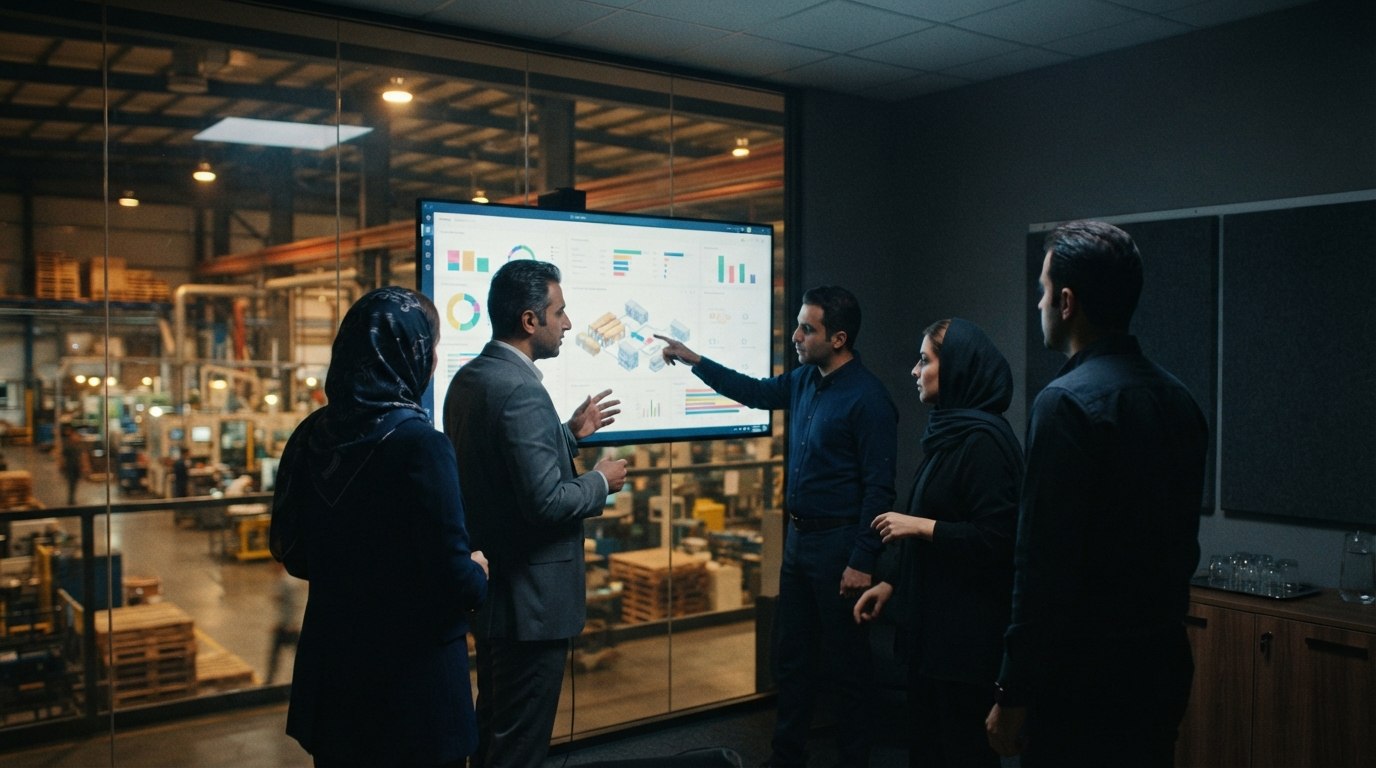
In a canned demo everything is perfect. The data is clean, customers pay on time, stock never runs short and reports turn colourful in one click. Your plant is not like that. You have credit notes, weighbridge tickets that disagree with the waybill, and a manager who wants a report every Monday at eight that is in no brochure.
So an ERP software demo is either the most important hour of your buying decision or the most expensive show you ever watched. The difference: do you watch the show, or do you interrogate the software?
Two kinds of demo
- The canned demo: the vendor runs a rehearsed story on made-up data. Pretty, but it says nothing about your working day.
- The scripted demo: you send your own scenario in advance and the vendor must run exactly that. Harder for them, and it actually proves something.
If you take one thing from this article: ask for a scripted demo.
Before the session: seven things to bring

- One real day: a plain description of a working day, from purchase and goods receipt to sale and payment.
- Three real documents: a purchase invoice, a goods receipt and a sales invoice with a discount or a return. Add a weighbridge ticket if you weigh goods.
- The CEO’s favourite report: the one someone builds in Excel every week.
- A list of roles: who must see what, and who must not.
- A sample of today’s data: an export of the chart of accounts, items or customers from your current system.
- Today’s pain: the three tasks that eat the most time or create the most errors.
- The right team: bring the accountant, the storekeeper and someone from IT, not only managers.
In the session: ten questions that make vendors sweat
Golden rule: “show me”, not “tell me”. An answer given only in words is half an answer.
- Post a sales invoice. What changes automatically: the ledger, stock, the management report? Show it now.
- A document posted by mistake. Is it deleted or voided? Where is the trail of changes?
- A storekeeper logs in. What exactly do they see? Can they give anyone more access than they have?
- A report that does not exist. If you build it, does the next update wipe it?
- Our current data. What gets migrated, and how long does it take?
- Our own server. Can it run on our server? The same version or a lagging branch?
- Mobile and Windows. Which app do field staff and terminal operators use, and where does their data come from?
- Calendar and print. Show our calendar, our language and our letterhead on a printout.
- Support. When production stops because of the software, who answers and how fast?
- Time to go live. For an organisation our size, how long from signature to the first real working day?
Red flags
- “It’s in the next version” with no date and nothing to show.
- Slides only, or only a recorded video.
- Hands off the keyboard: you are not allowed to enter anything yourself.
- “Everything is possible” as the answer to every question, without showing it.
- A separate build for on-premise that falls behind on updates.
After the session: score it, don’t feel it
That same evening, while details are fresh, score each criterion from 1 to 5 and multiply by its weight. Change the weights to fit your own priorities:
- Ran our real scenario Suggested weight: 30%
- Integration (one document, everywhere) Suggested weight: 20%
- Access rights and audit trail Suggested weight: 15%
- Data migration and time to go live Suggested weight: 15%
- Support and contract Suggested weight: 10%
- Total cost of ownership Suggested weight: 10%
For the last row, read our guide to ERP software price and buying.
What a FaraERP demo looks like
A FaraERP demo is not a canned slideshow. Before the session we set up a real scenario from your business, so you see the work you do every day done in FaraERP. The demo is free and comes with no obligation.
- One system, not patched-together tools: 31 modules on one database; a sales invoice posts its entry and deducts stock at the same instant.
- Voided, never deleted: documents are voided, and it is always clear who changed what, and when.
- Our servers or yours: the very same version can run entirely inside your own network.
- Data migration: chart of accounts, parties, items, warehouses and opening balances; one to three weeks depending on how much legacy data you have.
- Going live: a small business with two or three modules usually takes one to two weeks; an organisation with production, several warehouses and years of legacy data, one to three months.
- Web, desktop, mobile: managers in the browser, weighbridge operators on Windows, drivers on their phones.
Come and interrogate the software. Bring your hardest question; if something is not in FaraERP today, we will say so on the spot. Book a free FaraERP demo